5 Innovative Fundraising Strategies for Modern Hospital Foundations
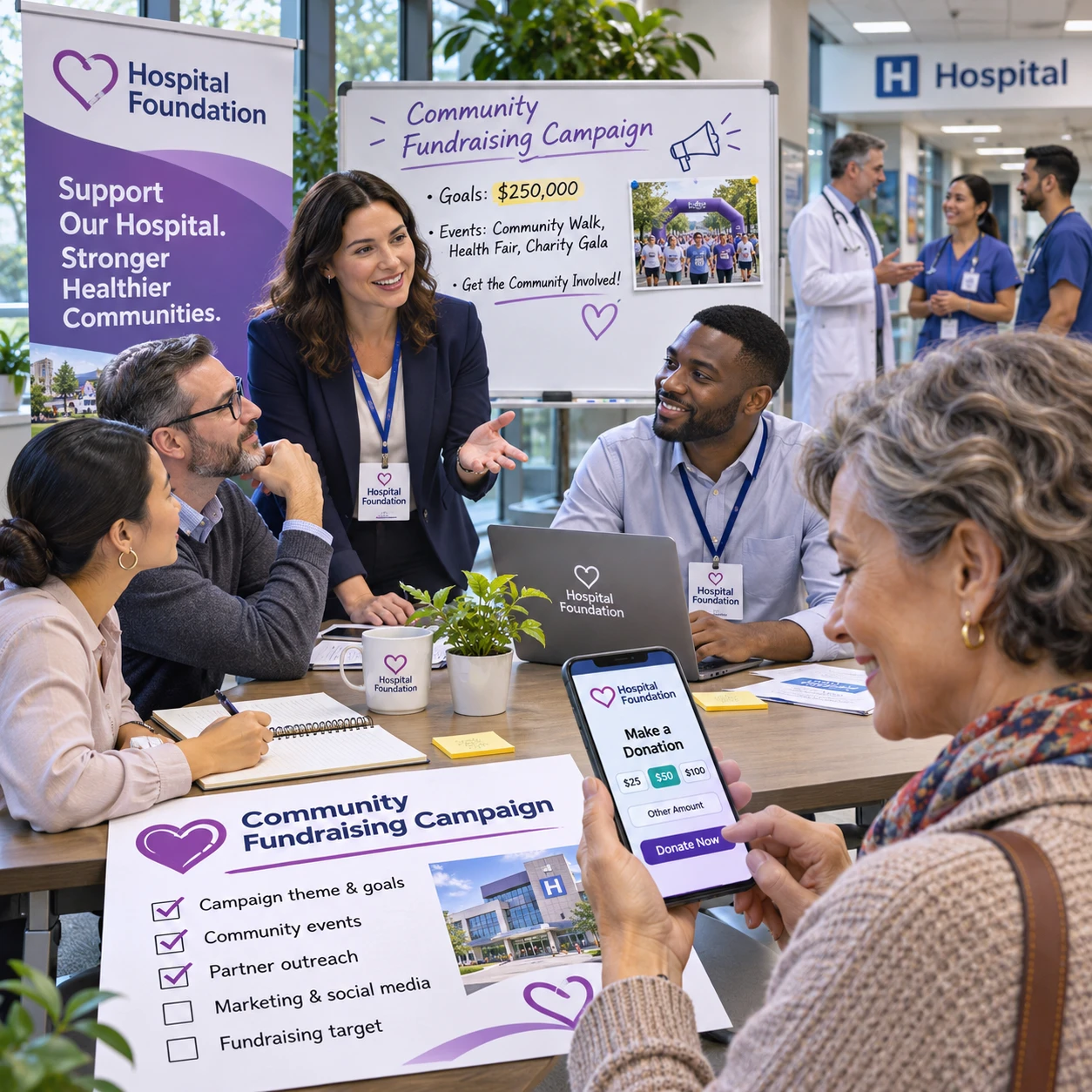
Hospital foundations raise funds in a landscape shaped by changing donor habits, busy schedules, and many competing causes. A strong approach combines trusted fundraising events and personal relationships with accessible digital tools, clear healthcare priorities, and thoughtful donor stewardship.
These five strategies can help a foundation strengthen donor engagement and connect healthcare philanthropy to community needs. None guarantees a particular result; each works best when it fits the hospital’s priorities, audience, and available staff capacity.
Why hospital foundations need a modern fundraising mix
A modern fundraising mix helps a hospital foundation reach donors in more than one way while keeping gifts connected to real healthcare priorities. Combining digital fundraising, personal outreach, events, and recurring giving can make participation easier for different supporters.
Some donors prefer a conversation with a foundation representative. Others want to give from a phone, join a friend’s campaign, or contribute a manageable amount every month. Relying on one channel can leave those potential supporters out. A mix also helps a foundation avoid treating a single event or appeal as its only source of community engagement.
Start with the need behind the fundraising. A foundation might support a new piece of equipment, patient and family programs, staff education, or a research priority. Explain what gifts will support, who benefits, and how the foundation will report progress. Donors should understand that philanthropy supports defined priorities; it does not replace clinical care, public funding, or the hospital’s responsibilities.
Before adding a new tactic, consider the full cost: staff time, technology, payment processing, accessibility, and follow-up. Innovation is useful when it makes giving easier or relationships stronger, not simply because a platform is new.
1. Build digital-first giving experiences
Digital-first giving lets supporters learn about a hospital foundation’s priorities and make a donation through a clear, mobile-friendly experience. A simple donation page and focused online campaigns can reduce friction for donors who want to act quickly.
Check the giving journey on a phone, not only on a desktop. The page should load reliably, explain the purpose of the appeal, and make donation amounts easy to select. Offer a few suggested amounts with plain-language context, while allowing donors to enter another amount. Keep the form focused: request only the information needed to process the gift and provide a receipt.
For an online campaign, connect the call to action to a specific priority. For example, a campaign might invite donations toward a family-support program and explain how the funds will be used. Avoid implying that a particular gift will purchase a specific outcome unless the allocation is accurate and approved.
- Use a prominent, accessible donate button and readable text.
- State whether the gift is one-time or recurring, and make the choice clear.
- Test the full process, including confirmation messages and receipts.
- Track visits, completed donations, average gift size, and recurring-gift selections.
A polished page can make giving more convenient, but digital tools require maintenance and prompt donor support. Review the experience regularly, and provide a clear contact option for questions or difficulties.
2. Turn supporters into peer-to-peer fundraisers
Peer-to-peer fundraising invites patients, families, staff, and community members to raise funds through their own networks for a hospital foundation campaign. Supporters can share why a priority matters to them and direct friends to a central donation page.
Make participation easy. Provide a short campaign explanation, suggested wording, shareable graphics, and a personal fundraising page or link. Offer optional guidance on setting a realistic goal and thanking donors. A volunteer should not have to build campaign materials from scratch to take part.
For instance, a community member could organize a birthday appeal for a hospital program that helped their family. A staff member might invite colleagues to support an approved equipment or patient-support priority. Each fundraiser should use accurate language and follow the foundation’s rules for representing the hospital.
Peer-to-peer campaigns can extend reach, but they also involve quality control. Give fundraisers clear boundaries about patient privacy, medical claims, and how funds will be used. The foundation should own the donation process, provide support, and thank both fundraisers and donors. Monitor participation and gifts, but also ask whether the experience was manageable and respectful for volunteers.
3. Grow recurring and purpose-driven giving
Recurring giving gives donors a way to contribute regularly, while purpose-driven giving connects each appeal to a clearly explained healthcare priority. Together, they can support ongoing engagement and help foundations plan donor communications more thoughtfully.
Offer a monthly option alongside one-time giving, without pressuring donors to choose it. Explain the amount, frequency, and cancellation process before the donor submits a gift. A welcome message should confirm the arrangement and tell the donor whom to contact with questions.
Purpose matters as much as payment frequency. A recurring donor may want to support a broad area such as patient and family services, or a defined campaign with a clear timeline. Describe the priority in terms donors can understand, and be transparent if the hospital may direct funds to a closely related need when circumstances change. Do not suggest that regular gifts guarantee a particular clinical outcome.
Use a simple stewardship rhythm: acknowledge the first gift, provide occasional updates on the funded priority, and invite feedback without overloading inboxes. Track retention, cancellations, gift processing issues, and donor questions. A monthly program takes ongoing administration; it is a poor fit if the foundation cannot manage accurate records, receipts, and respectful communications.
4. Reimagine events with hybrid and community formats
Hybrid and community fundraising events combine in-person participation with online ways to learn, connect, and give. They can offer more options for supporters who cannot attend a traditional gala or other large event.
A foundation might pair a local walk, open house, or community gathering with a live online appeal and a donation page that remains available afterward. Keep the online component purposeful: stream a short program, share a campaign update, or give remote participants a clear way to take part. An event does not need a complicated broadcast to include people at a distance.
Accessibility should shape the plan. Consider venue access, transportation, timing, captioning, and whether people can participate without making a donation. Communicate how event proceeds support the stated priority, including any relevant costs or restrictions. Event budgets can include venue, production, staffing, and payment fees, so assess the net funds raised as well as attendance and engagement.
- Choose an event format that suits the audience and the campaign.
- Offer a simple online giving route before, during, and after the event.
- Plan clear roles for staff and volunteers, including donor follow-up.
- Compare net revenue and relationship-building value with the time required.
Events are valuable for connection, but not every event needs to grow. If an event consumes substantial staff time and produces little net support or donor engagement, consider changing its format or frequency.
5. Use storytelling and stewardship to deepen trust
Ethical patient and family stories, paired with timely donor stewardship, help supporters understand why a healthcare priority matters and how the foundation follows through. Trust depends on accuracy, consent, privacy, and clear reporting.
Invite people to share their experiences without making participation a condition of receiving care or support. Explain where and how a story may appear, including online or in fundraising materials, and obtain informed permission through the hospital’s approved process. Respect a person’s choice to decline or withdraw consent where applicable. Do not reveal identifying health information without proper authorization.
Stories should preserve the person’s voice and dignity. Avoid presenting one patient’s experience as typical of every patient, promising a medical result, or implying that donations replace services the hospital must provide. When an individual story is not appropriate, use program updates, staff perspectives, or clearly labeled, non-identifying examples.
Stewardship continues after the donation. Send a prompt acknowledgment, then share concise updates that explain what the campaign supported and what comes next. Report honestly if plans change or a target is not met. Strong donor stewardship is a relationship practice, not a stream of appeals; invite supporters to ask questions and make sure someone can respond.
Choose strategies that fit your foundation
The right fundraising strategy is the one that aligns with hospital priorities, donor needs, staff capacity, and a practical way to measure progress. Begin with a manageable test, learn from the results, and expand only when the approach is sustainable.
Use a four-part fit check before launching:
- Priority: Is the healthcare need clear, approved, and explainable to donors?
- Audience: Does the approach suit the people you hope to reach?
- Capacity: Can staff and volunteers manage setup, communications, data, and follow-up?
- Evidence: What will you measure, and how will you use what you learn?
Choose a few measures tied to the strategy. Digital giving might be assessed through completed donations and page abandonment; a peer-to-peer campaign through active fundraisers and donor retention; an event through net revenue and participation; recurring giving through retention and processing reliability. Pair numbers with feedback from donors and staff. A campaign that brings in gifts but damages trust or overwhelms the team needs a rethink.
Keep established methods where they work, and add new ones with a clear purpose. A balanced approach helps a hospital foundation build lasting relationships while directing healthcare philanthropy toward priorities the community can understand and support.
Frequently asked questions
How can a hospital foundation choose the right fundraising strategy?
Match the strategy to an approved healthcare priority, the preferences of the intended audience, and the foundation’s capacity. Start with a small test and evaluate both fundraising results and donor experience before scaling it.
How can digital fundraising complement events?
Use digital tools to share event information, accept gifts from people who cannot attend, and keep a campaign page available after the event. Make online participation easy, while preserving the personal connection that makes an event meaningful.
What makes a recurring-giving program effective?
Clear gift terms, reliable processing, easy cancellation, prompt acknowledgment, and relevant updates all help. Donors should understand the purpose of their gift and be able to contact the foundation with questions.
How should foundations share patient stories ethically?
Use the hospital’s consent and privacy processes, explain how a story will be used, and respect a person’s choice not to participate. Share only approved information, preserve the individual’s dignity, and avoid promising outcomes or implying that giving determines access to care.